Actor Portrayal

A flexible dosing schedule with RotaTeq® (Rotavirus Vaccine, Live, Oral, Pentavalent)

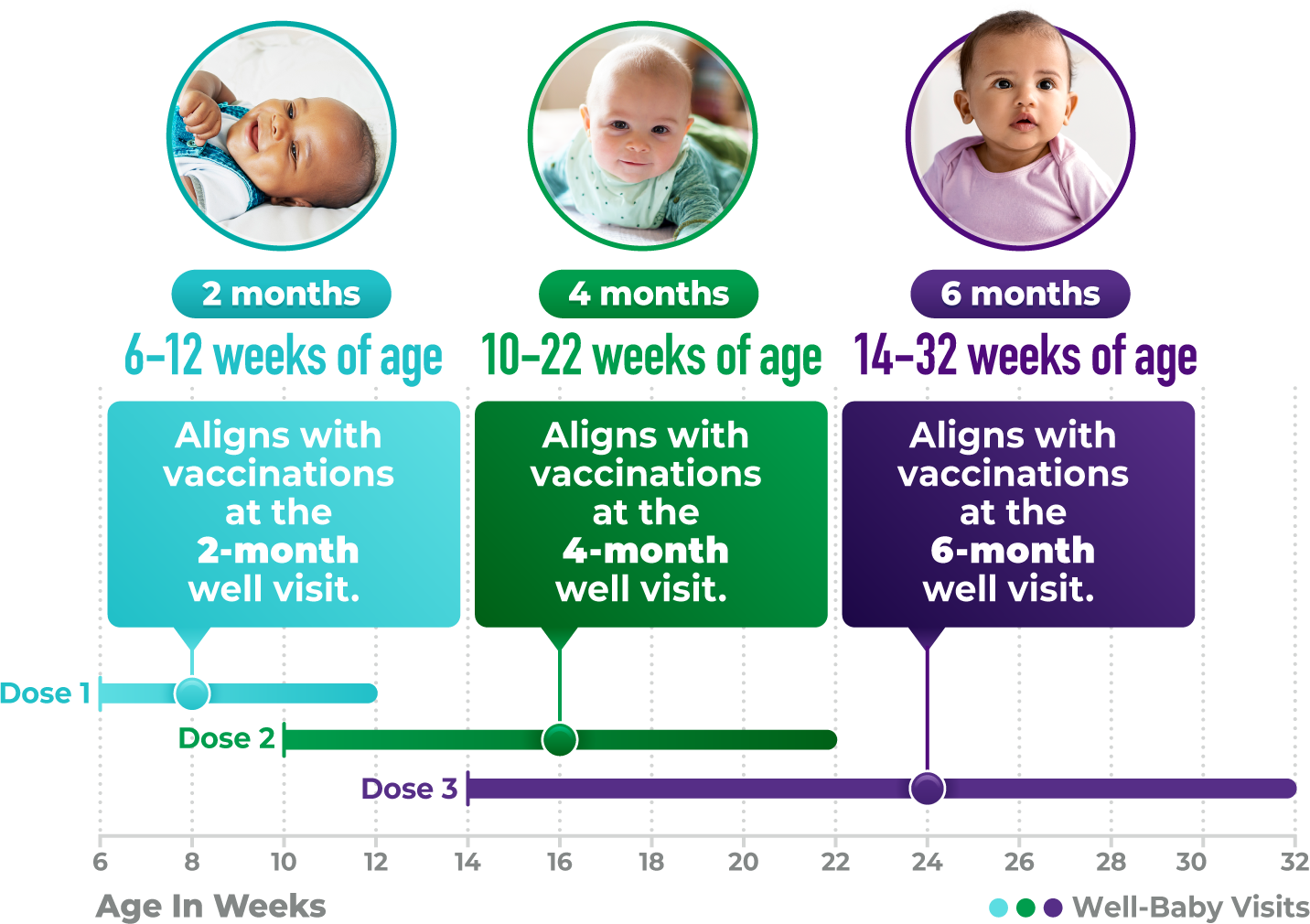
Vaccination schedule for RotaTeq1,2

Coverage with RotaTeq combines a flexible dosing schedule along side three fully liquid, ready-to-use doses to help protect your pediatric patients.a
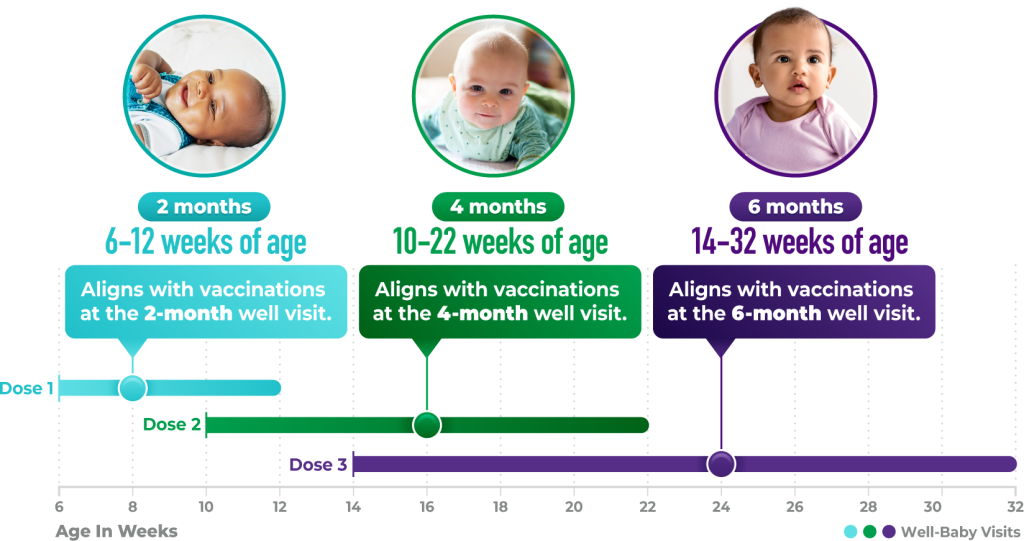
Dosing Schedule for RotaTeq® (Rotavirus Vaccine, Live, Oral, Pentavalent) Aligns With Routine 2-Month, 4-Month, and 6-Month Well VisitsDosing Schedule for RotaTeq® (Rotavirus Vaccine, Live, Oral, Pentavalent) Aligns With Routine 2-Month, 4-Month, and 6-Month Well Visits
Actor Portrayals
Actor Portrayals

The 3-dose schedule of RotaTeq aligns with routine well-baby visits1,2

aThe first dose of RotaTeq should be administered orally between 6 to 12 weeks of age, with subsequent doses administered at 4- to 10-week intervals. The third dose should not be given after 32 weeks of age. Based on the dosing schedule for RotaTeq, the 3-dose series can be completed as early as 14 weeks of age (eg, doses given at 6, 10, and 14 weeks of age). The safety and efficacy of RotaTeq have not been established in infants less than 6 weeks of age or greater than 32 weeks of age.

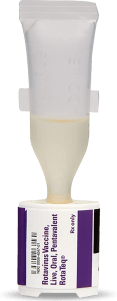
Administration of RotaTeq, a rotavirus vaccine

RotaTeq comes in a fully liquid, ready-to-use tube. In clinical trials, RotaTeq was routinely administered concomitantly with other licensed pediatric vaccines.b

bIn clinical trials, RotaTeq was administered concomitantly with diphtheria and tetanus toxoids and acellular pertussis (DTaP), inactivated poliovirus vaccine (IPV), H. influenzae type b conjugate (Hib), hepatitis B vaccine (Hep B), and pneumococcal conjugate vaccine.
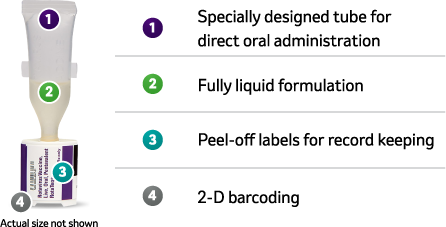
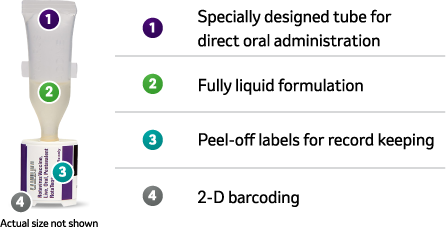
Specially Designed Tube for RotaTeq® (Rotavirus Vaccine, Live, Oral, Pentavalent) for Direct Oral Administration in a Ready-to-Use Liquid Formulation, With Peel-Off Labels for Record Keeping, and 2-D Barcoding

RotaTeq is for oral use only. Not for injection.

How to open

View a demonstration of how to open the packaging for RotaTeq

How to administer

View the administration video


Actual size not shown

Looking to stock RotaTeq in your practice?

Simply register or log in to your account to get started.


CDC recommendations

Find out about the CDC recommendations for rotavirus vaccination in pediatric patients.1

See the CDC recommendations

Storage and handling

Find out how to store and handle RotaTeq in your practice.

Learn more

References

  1. Advisory Committee on Immunization Practices (ACIP). Recommended child and adolescent immunization schedule for ages 18 years or younger, United States, 2025. Last reviewed October 7, 2025. Accessed October 27, 2025. https://www.cdc.gov/vaccines/hcp/imz-schedules/downloads/child/0-18yrs-child-combined-schedule.pdf
  2. MedlinePlus. National Library of Medicine (NLM). Well-child visits. Last reviewed January 1, 2025. Accessed October 30, 2025. https://medlineplus.gov/ency/article/001928.htm
ExternalSitePopup

Indications and Usage

RotaTeq is indicated for the prevention of rotavirus gastroenteritis in infants and children caused by Types G1, G2, G3, G4, and G9 when administered as a 3-dose series to infants between the ages of 6 to 32 weeks. The first dose of RotaTeq should be administered between 6 and 12 weeks of age.

The vaccination series consists of 3 ready-to-use liquid doses of RotaTeq administered orally starting at 6 to 12 weeks of age, with the subsequent doses administered at 4- to 10-week intervals. The third dose should not be given after 32 weeks of age.

Selected Safety Information

RotaTeq should not be administered to infants with a demonstrated history of hypersensitivity to the vaccine or any component of the vaccine.

Infants with Severe Combined Immunodeficiency Disease (SCID) should not receive RotaTeq. Post-marketing reports of gastroenteritis, including severe diarrhea and prolonged shedding of vaccine virus, have been reported in infants who were administered RotaTeq and later identified as having SCID.

Infants with a history of intussusception should not receive RotaTeq.

No safety or efficacy data are available from clinical trials regarding the administration of RotaTeq to infants who are potentially immunocompromised.

In a post-marketing observational study in the US, cases of intussusception were observed in temporal association within 21 days following the first dose of RotaTeq, with a clustering of cases in the first 7 days.

No safety or efficacy data are available for administration of RotaTeq to infants with a history of gastrointestinal disorders.

Vaccine virus transmission from vaccine recipient to nonvaccinated contacts has been reported. Caution is advised when considering whether to administer RotaTeq to individuals with immunodeficient contacts.

In clinical trials, the most common adverse events included diarrhea, vomiting, irritability, otitis media, nasopharyngitis, and bronchospasm.

In post-marketing experience, intussusception (including death) and Kawasaki disease have been reported in infants who have received RotaTeq.

RotaTeq may not protect all vaccine recipients against rotavirus.

Before administering RotaTeq, please read the accompanying Prescribing Information. The Patient Product Information also is available.

Indications and Usage
Selected Safety Information

RotaTeq is indicated for the prevention of rotavirus gastroenteritis in infants and children caused by Types G1, G2, G3, G4, and G9 when administered as a 3-dose series to infants between the ages of 6 to 32 weeks. The first dose of RotaTeq should be administered between 6 and 12 weeks of age.

The vaccination series consists of 3 ready-to-use liquid doses of RotaTeq administered orally starting at 6 to 12 weeks of age, with the subsequent doses administered at 4- to 10-week intervals. The third dose should not be given after 32 weeks of age.

Selected Safety Information

RotaTeq should not be administered to infants with a demonstrated history of hypersensitivity to the vaccine or any component of the vaccine.

Infants with Severe Combined Immunodeficiency Disease (SCID) should not receive RotaTeq. Post-marketing reports of gastroenteritis, including severe diarrhea and prolonged shedding of vaccine virus, have been reported in infants who were administered RotaTeq and later identified as having SCID.

Infants with a history of intussusception should not receive RotaTeq.

No safety or efficacy data are available from clinical trials regarding the administration of RotaTeq to infants who are potentially immunocompromised.

In a post-marketing observational study in the US, cases of intussusception were observed in temporal association within 21 days following the first dose of RotaTeq, with a clustering of cases in the first 7 days.

No safety or efficacy data are available for administration of RotaTeq to infants with a history of gastrointestinal disorders.

Vaccine virus transmission from vaccine recipient to nonvaccinated contacts has been reported. Caution is advised when considering whether to administer RotaTeq to individuals with immunodeficient contacts.

In clinical trials, the most common adverse events included diarrhea, vomiting, irritability, otitis media, nasopharyngitis, and bronchospasm.

In post-marketing experience, intussusception (including death) and Kawasaki disease have been reported in infants who have received RotaTeq.

RotaTeq may not protect all vaccine recipients against rotavirus.

Before administering RotaTeq, please read the accompanying Prescribing Information. The Patient Product Information also is available.