Actor Portrayal

BRILLIANT DESIGN

One dose for all your
appropriate adult patients
1,2,a

A PCV specifically designed for adults that helps protect against the serotypes responsible for the most cases of adult IPD1,2,a

CAPVAXIVE is the only FDA-approved pneumococcal conjugate vaccine that helps protect against serotypes responsible for ~82% of invasive pneumococcal disease cases in adults 50 years and older, compared to ~54% by PCV20 on a national level.1,2,a

These values are based on CDC epidemiologic data and do not reflect the efficacy of the respective vaccines.2 There are currently no studies comparing the efficacy of CAPVAXIVE and PCV20.

Percentage of IPD cases caused by serotypes covered by CAPVAXIVE vs PCV20 among adults aged 50+ years at a national level1,2,a,b
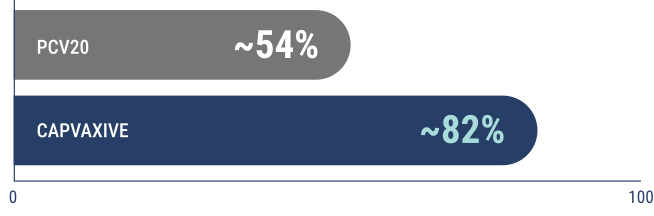
~54% Covered by PCV20 vs ~82% Covered by CAPVAXIVE

% of IPD cases in adults 50+ covered by vaccine serotypes

aBased on CDC ABC surveillance data from the years 2019–2023, representing ~35 million persons and 10 states across the US. Regional variations may exist.2-8


Compared to other pneumococcal vaccines indicated for adults, CAPVAXIVE includes 8 unique serotypes that are responsible for ~25% of IPD in adults aged 50 years and older at a national level1,2,a,c


UPDATED OCTOBER 2024

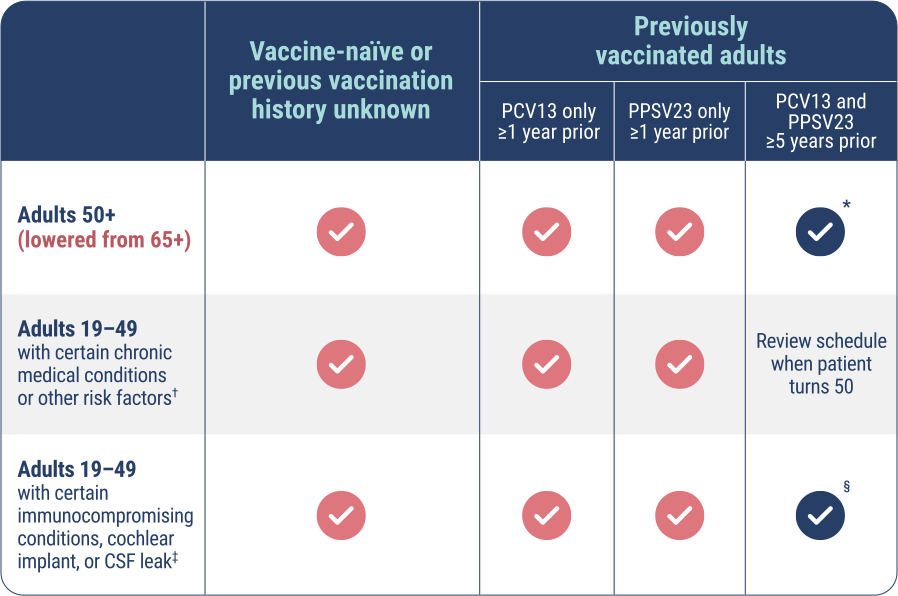
CAPVAXIVE is a single-dose PCV recommended by the CDC8

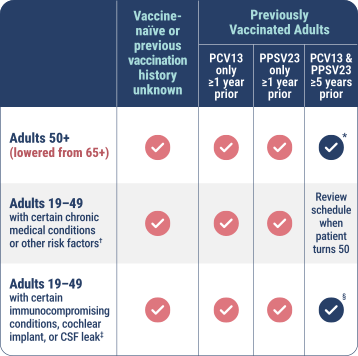
CAPVAXIVE PCV Recommendations From the CDC for Vaccine Naïve and Previously Vaccinated Adults Ages 19-49 and 50+CAPVAXIVE PCV Recommendations From the CDC for Vaccine Naïve and Previously Vaccinated Adults Ages 19-49 and 50+

*Routine if PCV13 was administered at any age and PPSV23 was administered before age 65 with the last pneumococcal vaccine being at least 5 years prior. Shared clinical decision-making if PCV13 was administered at any age and PPSV23 was administered at or after the age of 65 and the last pneumococcal vaccine was at least 5 years prior.8

dCertain chronic medical conditions (eg, diabetes, chronic heart disease, chronic lung disease, or chronic liver disease) or behavioral risk factors (eg, smoking or alcoholism).8

eSee ACIP recommendations for full list of immunocompromising conditions, including HIV.8

fAlso applies to patients with certain immunocompromising conditions who have received PCV13 followed by 2 doses of PPSV23.8

How high is the risk?

Pneumococcal pneumonia and IPD are serious risks for adult patients.1,9-11 Learn about the burden of disease and how your patients might be affected.

Share with health care professionals

bPCV20 serotypes for IPD case coverage: 1, 3, 4, 5, 6A, 6B, 7F, 8, 9V, 10A, 11A, 12F, 14, 15B, 18C, 19A, 19F, 22F, 23F, and 33F.12

CAPVAXIVE serotypes for IPD case coverage: 3, 6A, 7F, 8, 9N, 10A, 11A, 12F, 15A, 15B, 15C, 16F, 17F, 19A, 20A, 22F, 23A, 23B, 24F, 31, 33F, and 35B.

cOther available pneumococcal vaccines include PCV15, PCV20, and PPSV23.1

ABC, Active Bacterial Core; ACIP, Advisory Committee on Immunization Practices; CDC, Centers for Disease Control and Prevention; CSF, cerebrospinal fluid; FDA, Food and Drug Administration; HIV, human immunodeficiency virus; IPD, invasive pneumococcal disease; PCV, pneumococcal conjugate vaccine; PCV13, 13-valent pneumococcal conjugate vaccine; PCV15, 15-valent pneumococcal conjugate vaccine; PCV20, 20-valent pneumococcal conjugate vaccine; PPSV23, 23-valent pneumococcal polysaccharide vaccine; US, United States.

References:

  1. ABCs bact facts interactive data dashboard. SPN serotypes 1998-2023. Centers for Disease Control and Prevention. August 21, 2025. Accessed August 27, 2025. https://www.cdc.gov/abcs/bact-facts/data-dashboard.html
  2. 1998-2023 serotype data for invasive pneumococcal disease cases by age group from active bacterial core surveillance. Centers for Disease Control and Prevention. Updated March 14, 2025. Accessed August 11, 2025. https://data.cdc.gov/Public-Health-Surveillance/1998-2023-Serotype-Data-for-Invasive-Pneumococcal-/qvzb-qs6p/about_data
  3. Active Bacterial Core surveillance (ABCs) report, Emerging Infections Program network, Streptococcus pneumoniae, 2019. Centers for Disease Control and Prevention. Updated June 16, 2021. Accessed August 1, 2025. https://www.cdc.gov/abcs/downloads/SPN_Surveillance_Report_2019.pdf
  4. Active Bacterial Core surveillance (ABCs) report, Emerging Infections Program network, Streptococcus pneumoniae, 2020. Centers for Disease Control and Prevention. Updated September 20, 2022. Accessed August 1, 2025. https://stacks.cdc.gov/view/cdc/140328

  5. Active Bacterial Core surveillance (ABCs) report, Emerging Infections Program network, Streptococcus pneumoniae, 2021. Centers for Disease Control and Prevention. Updated June 2, 2023. Accessed August 4, 2025. https://www.cdc.gov/abcs/downloads/SPN_Surveillance_Report_2021.pdf
  6. Active Bacterial Core surveillance (ABCs) report, Emerging Infections Program network, Streptococcus pneumoniae, 2022. Centers for Disease Control and Prevention. Updated July 5, 2024. Accessed August 1, 2025. https://www.cdc.gov/abcs/downloads/SPN_Surveillance_Report_2022.pdf

  7. Active Bacterial Core surveillance (ABCs) report, Emerging Infections Program network, Streptococcus pneumoniae, 2023. Centers for Disease Control and Prevention. Updated March 20, 2025. Accessed July 28, 2025. https://www.cdc.gov/abcs/downloads/SPN_Surveillance_Report_2023.pdf
  8. Kobayashi M, Leidner AJ, Gierke R, et al. Expanded recommendations for use of pneumococcal conjugate vaccines among adults aged ≥50 years: recommendations of the Advisory Committee on Immunization Practices — United States, 2024. MMWR Morb Mortal Wkly Rep. 2025;74(1):1-8. doi:10.15585/mmwr.mm7401a1
  9. Grant LR, Meche A, McGrath L, et al. Risk of pneumococcal disease in US adults by age and risk profile. Open Forum Infect Dis. 2023;10(5):ofad192. Doi:10.1093/ofid/ofad192

  10. Grant LR, Meche A, McGrath L, et al. Supplementary material to: Risk of pneumococcal disease in US adults by age and risk profile. Open Forum Infect Dis. 2023;10(5):ofad192. Doi:10.1093/ofid/ofad192

  11. Clinical features of pneumococcal disease. Centers for Disease Control and Prevention. February 6, 2024. Accessed August 1, 2025. https://www.cdc.gov/pneumococcal/hcp/clinical-signs/

  12. Prevnar 20. Prescribing Information. Pfizer Inc; 2023.
patientSite

Indications

CAPVAXIVE® (Pneumococcal 21-valent Conjugate Vaccine) is indicated for:

  • active immunization for the prevention of invasive disease caused by Streptococcus pneumoniae serotypes 3, 6A, 7F, 8, 9N, 10A, 11A, 12F, 15A, 15B, 15C, 16F, 17F, 19A, 20A, 22F, 23A, 23B, 24F, 31, 33F, and 35B in individuals 18 years of age and older.
  • active immunization for the prevention of pneumonia caused by S. pneumoniae serotypes 3, 6A, 7F, 8, 9N, 10A, 11A, 12F, 15A, 15C, 16F, 17F, 19A, 20A, 22F, 23A, 23B, 24F, 31, 33F, and 35B in individuals 18 years of age and older.

The indication for the prevention of pneumonia caused by S. pneumoniae serotypes 3, 6A, 7F, 8, 9N, 10A, 11A, 12F, 15A, 15C, 16F, 17F, 19A, 20A, 22F, 23A, 23B, 24F, 31, 33F, and 35B is approved under accelerated approval based on immune responses as measured by opsonophagocytic activity (OPA). Continued approval for this indication may be contingent upon verification and description of clinical benefit in a confirmatory trial.

Select Safety Information

Do not administer CAPVAXIVE® (Pneumococcal 21-valent Conjugate Vaccine) to individuals with a history of a severe allergic reaction (eg, anaphylaxis) to any component of CAPVAXIVE or to diphtheria toxoid.
 
Individuals with altered immunocompetence, including those receiving immunosuppressive therapy, may have a reduced immune response to CAPVAXIVE.
 
The most commonly reported (>10%) solicited adverse reactions in individuals 18 through 49 years of age who received CAPVAXIVE were: injection-site pain (73.1%), fatigue (36.0%), headache (27.5%), myalgia (16.4%), injection-site erythema (13.8%), and injection-site swelling (13.3%).
 
The most commonly reported (>10%) solicited adverse reactions in individuals 50 years of age and older who received CAPVAXIVE were: injection-site pain (41.2%), fatigue (19.7%), and headache (11.0%).
 
Vaccination with CAPVAXIVE may not protect all vaccine recipients.

Before administering CAPVAXIVE, please read the accompanying Prescribing Information. The Patient Information also is available.

Indications

CAPVAXIVE® (Pneumococcal 21-valent Conjugate Vaccine) is indicated for:

  • active immunization for the prevention of invasive disease caused by Streptococcus pneumoniae serotypes 3, 6A, 7F, 8, 9N, 10A, 11A, 12F, 15A, 15B, 15C, 16F, 17F, 19A, 20A, 22F, 23A, 23B, 24F, 31, 33F, and 35B in individuals 18 years of age and older.
  • active immunization for the prevention of pneumonia caused by S. pneumoniae serotypes 3, 6A, 7F, 8, 9N, 10A, 11A, 12F, 15A, 15C, 16F, 17F, 19A, 20A, 22F, 23A, 23B, 24F, 31, 33F, and 35B in individuals 18 years of age and older.

The indication for the prevention of pneumonia caused by S. pneumoniae serotypes 3, 6A, 7F, 8, 9N, 10A, 11A, 12F, 15A, 15C, 16F, 17F, 19A, 20A, 22F, 23A, 23B, 24F, 31, 33F, and 35B is approved under accelerated approval based on immune responses as measured by opsonophagocytic activity (OPA). Continued approval for this indication may be contingent upon verification and description of clinical benefit in a confirmatory trial.

CAPVAXIVE® (Pneumococcal 21-valent Conjugate Vaccine) is indicated for:

  • active immunization for the prevention of invasive disease caused by Streptococcus pneumoniae serotypes 3, 6A, 7F, 8, 9N, 10A, 11A, 12F, 15A, 15B, 15C, 16F, 17F, 19A,

CAPVAXIVE® (Pneumococcal 21-valent Conjugate Vaccine) is indicated for:

  • active immunization for the prevention of invasive disease caused by Streptococcus pneumoniae serotypes 3, 6A, 7F, 8, 9N, 10A, 11A, 12F, 15A, 15B, 15C, 16F, 17F, 19A,

Select Safety Information

Do not administer CAPVAXIVE® (Pneumococcal 21-valent Conjugate Vaccine) to individuals with a history of a severe allergic reaction (eg, anaphylaxis) to any component of CAPVAXIVE or to diphtheria toxoid.
 
Individuals with altered immunocompetence, including those receiving immunosuppressive therapy, may have a reduced immune response to CAPVAXIVE.
 
The most commonly reported (>10%) solicited adverse reactions in individuals 18 through 49 years of age who received CAPVAXIVE were: injection-site pain (73.1%), fatigue (36.0%), headache (27.5%), myalgia (16.4%), injection-site erythema (13.8%), and injection-site swelling (13.3%).
 
The most commonly reported (>10%) solicited adverse reactions in individuals 50 years of age and older who received CAPVAXIVE were: injection-site pain (41.2%), fatigue (19.7%), and headache (11.0%).
 
Vaccination with CAPVAXIVE may not protect all vaccine recipients.

Before administering CAPVAXIVE, please read the accompanying Prescribing Information. The Patient Information also is available.

Do not administer CAPVAXIVE to individuals with a history of a severe

Do not administer CAPVAXIVE to individuals with a history of a severe allergic reaction (eg, anaphylaxis) to any component of CAPVAXIVE or to diphtheria toxoid.

Individuals with altered immunocompetence, including those receiving immunosuppressive therapy, may have a reduced immune response to CAPVAXIVE.