
Choose the robust and early protection of VAXNEUVANCE

VAXNEUVANCE delivers superior immune responses at 7 months for 3 key disease-causing serotypes1,a-c

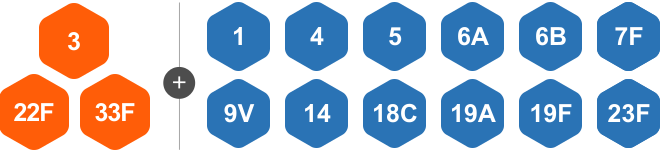
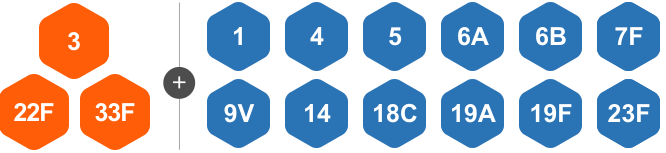
Image Showing Serotypes Evaluated in Clinical Trials for VAXNEUVANCE Versus PCV13: 3, 22F, 33F (Secondary Endpoint) and Serotypes 1, 4, 5, 6A, 6B, 7F, 9V, 14, 18C, 19A, 19F, 23F (Primary Endpoint)Image Showing Serotypes Evaluated in Clinical Trials for VAXNEUVANCE Versus PCV13: 3, 22F, 33F (Secondary Endpoint) and Serotypes 1, 4, 5, 6A, 6B, 7F, 9V, 14, 18C, 19A, 19F, 23F (Primary Endpoint)

VAXNEUVANCE was studied vs PCV13.

Randomized controlled trials assessing the clinical efficacy of VAXNEUVANCE compared to PCV13 have not been conducted.


No randomized controlled clinical trials have been conducted between PCV20 and VAXNEUVANCE in pediatric patients.

VAXNEUVANCE provides superior immune responses postdose 3 and postdose 4 for Serotype 3a-d

Serotype 3 Postdose 3 - VAXNEUVANCE: 93.1%; PCV13: 74%Serotype 3 Postdose 3 - VAXNEUVANCE: 93.1%; PCV13: 74%

Serotype 3 Postdose 3c

70%70%

higher immunogenicity vs PCV13

IgG GMC Ratio vs PCV13, 1.70 (95% CI: 1.54, 1.86)

Serotype 3 Postdose 4d

43%43%

higher immunogenicity vs PCV13

IgG GMC Ratio vs PCV13, 1.43 (95% CI: 1.30, 1.57)

GMC ratios postdose 3a

Primary endpoint: VAXNEUVANCE delivered comparable immune responses for 12 of the 13 shared serotypes found in PCV13. Shared Serotype 6A was just below the noninferiority criteria by a small margin, with the lower bound of the 2-sided 95% CI for the GMC ratio being 0.48 vs >0.5.2

Randomized controlled trials assessing the clinical efficacy of VAXNEUVANCE compared to PCV13 have not been conducted.

default-sum-open-background-color
default-sum-close-background-color
false
default-sum-open-hover-color
default-sum-open-focus-color
default-sum-close-focus-color
.default-sum-close-hover-color

Study design

Study 8 was a pivotal, double-blind, active comparator-controlled study in which participants were randomized to receive VAXNEUVANCE (N=860) or PCV13 (N=860) in a 4-dose series. The first 3 doses were administered to infants at 2, 4, and 6 months of age and the fourth dose was administered to children at 12 through 15 months of age. Participants also received other licensed pediatric vaccines concomitantly. Immune responses were measured by IgG response rates, IgG GMCs, and OPA GMTs for all 15 serotypes contained in VAXNEUVANCE.

aMeasurements were taken 30 days postdose specified.
bSecondary endpoint: Postdose 3 IgG response rate percentage point difference vs PCV13 (95% CI): for Serotype 3, 19.1 (14.4, 24.0); for Serotype 22F, 8.1 (5.1, 11.5); for Serotype 33F, -5.1 (-9.5, -0.7).2
cSecondary endpoint: Postdose 3 lgG GMC ratio vs PCV13 (95% CI): for Serotype 3, 1.70 (1.54, 1.86); for Serotype 22F, 3.63 (3.26, 4.04); for Serotype 33F, 1.25 (1.09, 1.44).2
dSecondary endpoint: Postdose 4 IgG GMC ratio vs PCV13 (95% CI): for Serotype 3, 1.43 (1.30, 1.57); for Serotype 22F, 4.77 (4.28, 5.32); for Serotype 33F, 2.68 (2.40, 3.00).2

CI, confidence interval; GMC, geometric mean concentration (mcg/mL); GMT, geometric mean titer; IgG, Immunoglobulin G; OPA, opsonophagocytic activity; PCV13, 13-valent pneumococcal conjugate vaccine; PCV20, 20-valent pneumococcal conjugate vaccine.

Learn about special populations

View safety & tolerability data

Stay updated on serotypes

Get details on early disease protection

References:

  1. Centers for Disease Control and Prevention (CDC). 2019–2023 serotype data for invasive pneumococcal disease cases by age group from Active Bacterial Core surveillance. Updated March 14, 2025. Accessed August 26, 2025. data.cdc.gov/d/qvzb-qs6p/visualization
  2. Lupinacci R, Rupp R, Wittawatmongkol O, et al. A phase 3, multicenter, randomized, double-blind, active-comparator controlled study to evaluate the safety, tolerability, and immunogenicity of a 4-dose regimen of V114, a 15-valent pneumococcal conjugate vaccine, in healthy infants (PNEU-PED). Vaccine. 2023;41(5):1142-1152. doi:10.1016/j.vaccine.2022.12.054
ExternalSitePopup

Indications and Usage

VAXNEUVANCE® (Pneumococcal 15-valent Conjugate Vaccine) is indicated for active immunization for the prevention of invasive disease caused by Streptococcus pneumoniae serotypes 1, 3, 4, 5, 6A, 6B, 7F, 9V, 14, 18C, 19A, 19F, 22F, 23F, and 33F in individuals 6 weeks of age and older.

Select Safety Information

Do not administer VAXNEUVANCE® (Pneumococcal 15-valent Conjugate Vaccine) to individuals with a severe allergic reaction (eg, anaphylaxis) to any component of VAXNEUVANCE or to diphtheria toxoid.


Some individuals with altered immunocompetence, including those receiving immunosuppressive therapy, may have a reduced immune response to VAXNEUVANCE.


Apnea following intramuscular vaccination has been observed in some infants born prematurely. Vaccination of premature infants should be based on the infant’s medical status and the potential benefits and possible risks.


The most commonly reported solicited adverse reactions in children vaccinated at 2, 4, 6, and 12 through 15 months of age, provided as a range across the 4-dose series, were: irritability (57.3% to 63.4%), somnolence (24.2% to 47.5%), injection-site pain (25.9% to 40.3%), fever ≥38.0°C (13.3% to 20.4%), decreased appetite (14.1% to 19.0%), injection-site induration (13.2% to 15.4%), injection-site erythema (13.7% to 21.4%), and injection-site swelling (11.3% to 13.4%).


The most commonly reported solicited adverse reactions in children 2 through 17 years of age vaccinated with a single dose were: injection-site pain (54.8%), myalgia (23.7%), injection-site swelling (20.9%), injection-site erythema (19.2%), fatigue (15.8%), headache (11.9%), and injection-site induration (6.8%).


The reported solicited adverse reactions in children 7 through 11 months of age who received 3 doses of VAXNEUVANCE were: fever ≥38.0°C (21.9%), irritability (32.8%), injection-site erythema (28.1%), somnolence (21.9%), injection-site swelling (18.8%), injection-site pain (18.8%), injection-site induration (17.2%), decreased appetite (15.6%), and urticaria (1.6%).


The reported solicited adverse reactions in children 12 through 23 months of age who received 2 doses of VAXNEUVANCE were: fever ≥38.0°C (11.3%), irritability (35.5%), injection-site pain (33.9%), somnolence (24.2%), decreased appetite (22.6%), injection-site erythema (21.0%), injection-site swelling (14.5%), and injection-site induration (8.1%).


Vaccination with VAXNEUVANCE may not protect all vaccine recipients.


Before administering VAXNEUVANCE, please read the accompanying Prescribing Information. The Patient Information also is available.

Indications and Usage
Select Safety Information

VAXNEUVANCE® (Pneumococcal 15-valent Conjugate Vaccine) is indicated for active immunization for the prevention of invasive disease caused by Streptococcus pneumoniae serotypes 1, 3, 4, 5, 6A, 6B, 7F, 9V, 14, 18C, 19A, 19F, 22F, 23F, and 33F in individuals 6 weeks of age and older.

Select Safety Information

Do not administer VAXNEUVANCE® (Pneumococcal 15-valent Conjugate Vaccine) to individuals with a severe allergic reaction (eg, anaphylaxis) to any component of VAXNEUVANCE or to diphtheria toxoid.


Some individuals with altered immunocompetence, including those receiving immunosuppressive therapy, may have a reduced immune response to VAXNEUVANCE.


Apnea following intramuscular vaccination has been observed in some infants born prematurely. Vaccination of premature infants should be based on the infant’s medical status and the potential benefits and possible risks.


The most commonly reported solicited adverse reactions in children vaccinated at 2, 4, 6, and 12 through 15 months of age, provided as a range across the 4-dose series, were: irritability (57.3% to 63.4%), somnolence (24.2% to 47.5%), injection-site pain (25.9% to 40.3%), fever ≥38.0°C (13.3% to 20.4%), decreased appetite (14.1% to 19.0%), injection-site induration (13.2% to 15.4%), injection-site erythema (13.7% to 21.4%), and injection-site swelling (11.3% to 13.4%).


The most commonly reported solicited adverse reactions in children 2 through 17 years of age vaccinated with a single dose were: injection-site pain (54.8%), myalgia (23.7%), injection-site swelling (20.9%), injection-site erythema (19.2%), fatigue (15.8%), headache (11.9%), and injection-site induration (6.8%).


The reported solicited adverse reactions in children 7 through 11 months of age who received 3 doses of VAXNEUVANCE were: fever ≥38.0°C (21.9%), irritability (32.8%), injection-site erythema (28.1%), somnolence (21.9%), injection-site swelling (18.8%), injection-site pain (18.8%), injection-site induration (17.2%), decreased appetite (15.6%), and urticaria (1.6%).


The reported solicited adverse reactions in children 12 through 23 months of age who received 2 doses of VAXNEUVANCE were: fever ≥38.0°C (11.3%), irritability (35.5%), injection-site pain (33.9%), somnolence (24.2%), decreased appetite (22.6%), injection-site erythema (21.0%), injection-site swelling (14.5%), and injection-site induration (8.1%).


Vaccination with VAXNEUVANCE may not protect all vaccine recipients.


Before administering VAXNEUVANCE, please read the accompanying Prescribing Information. The Patient Information also is available.