


Millions of men and women aged 45 and under may still benefit from vaccination5,6
Help protect against certain HPV-related cancers caused by HPV types to which they haven’t yet been exposed.
GARDASIL 9 helps protect against certain cancers caused by 7 HPV typesa
- Cervical
- Vulvar
- Oropharyngeal*
*Continued approval contingent upon confirmatory trial.
- Vaginal
- Anal
aHPV Types 16, 18, 31, 33, 45, 52, and 58.
HPV is not the only cause of these cancers.
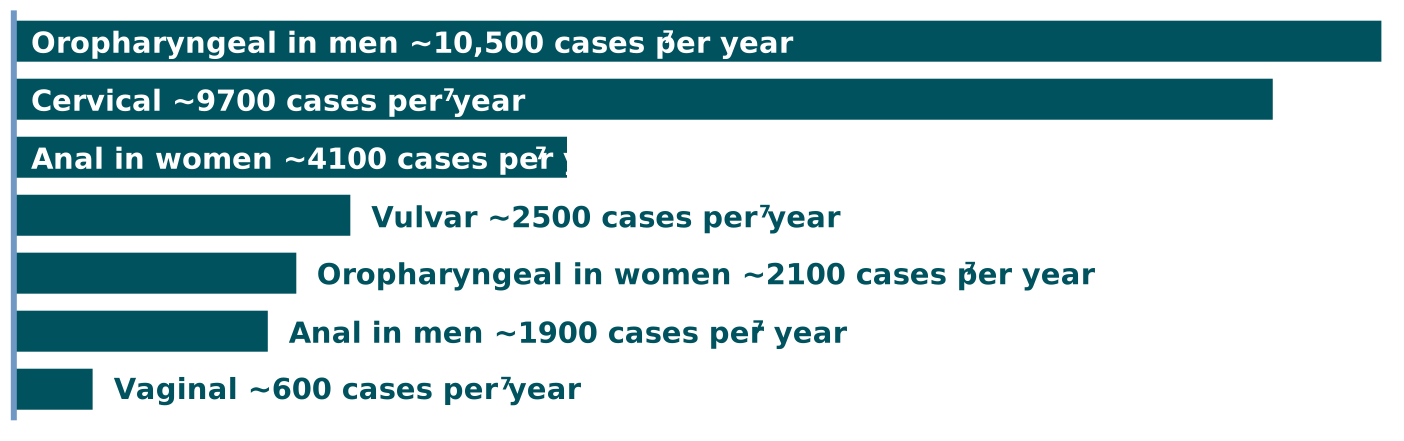
HPV-related oropharyngeal cancer has become the most common HPV-related cancer7
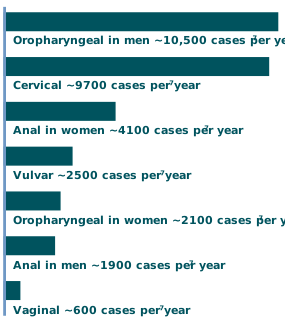
CDC-estimated 2012-2016 US incidence model of cancer cases attributed to 7 HPV types (16, 18, 31, 33, 45, 52, and 58)7
For most people, HPV clears on its own. But for those who don’t clear the virus, it could cause certain cancers and diseases.6, 8, 9
~31,400 HPV-attributable cancer cases per year7
The oropharyngeal and head and neck cancer indication is approved under accelerated approval based on effectiveness in preventing HPV-related anogenital disease. Continued approval for this indication may be contingent upon verification and description of clinical benefit in a confirmatory trial.
US Cancer Statistics assessed incidence of HPV-associated cancers to estimate the annual number of cancers caused by HPV, overall, and by state in 2012-2016.7
The estimated number of cancers attributable to HPV was calculated by multiplying the average number of HPV-associated cancers by the percentage of cancers diagnosed from 1993-2005 (prevaccine) that were attributable to HPV.7,10
Not all cervical, vulvar, vaginal, anal, and oropharyngeal cancers are caused by HPV.7
Detection of HPV DNA in an HPV study is insufficient to indicate a causal relation with the tumor.10
Don’t assume adults through age 45 have been vaccinated
According to National Health Interview Survey (NHIS) data based on a 2019 analysis11,b

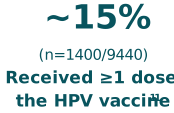
bNote that 718 respondents did not answer the question linked to the outcome of interest (“Have you ever received an HPV shot or vaccine?”) and were therefore excluded from the logistic regression analysis. We built crude and adjusted models, and using multivariable logistic regression, we estimated associations between sociodemographic factors and HPV vaccine uptake, obtaining odds ratios at a 95% confidence interval to determine statistical significance.11
There is still an opportunity to vaccinate appropriate adults aged 18-26
According to NHIS data based on a 2018, 2019, and 2022 analysis12,b
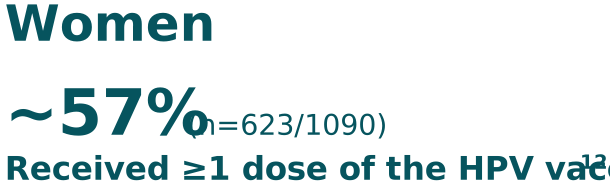
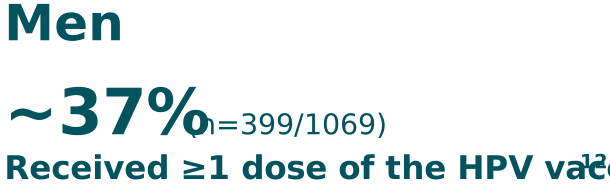
Seize the opportunity to help protect your appropriate adult patients against certain HPV-related cancers.
References:
- 2023 population estimates by age and sex. Table 1. Population by age and sex: 2023. United States Census Bureau. May 2024. Accessed May 20, 2025.
https://www.census.gov/data/tables/2023/demo/age-and-sex/2023-age-sex-composition.html - Meites E, Gee J, Unger E, Markowitz L. Epidemiology and Prevention of Vaccine-Preventable Diseases (Pink Book). Chapter 11: Human Papillomavirus. Centers for Disease Control and Prevention. April 23, 2024. Accessed July 9, 2025. https://www.cdc.gov/pinkbook/hcp/table-of-contents/chapter-11-human-papillomavirus.html
- Senkomago V, Henley SJ, Thomas CC, Mix JM, Markowitz LE, Saraiya M. Human papillomavirus–attributable cancers — United States, 2012–2016. MMWR Morb Mortal Wkly Rep. 2019;68:724-728. doi:http://dx.doi.org/10.15585/mmwr.mm6833a3
- HPV and oropharyngeal cancer. Centers for Disease Control and Prevention. September 17, 2024. Accessed September 25, 2024.
https://www.cdc.gov/cancer/hpv/oropharyngeal-cancer.html - Human papillomavirus (HPV) infection. Centers for Disease Control and Prevention. Last reviewed July 22, 2021. Accessed April 28, 2025. https://www.cdc.gov/std/treatment-guidelines/hpv.htm
- Saraiya M, Unger ER, Thompson TD, et al. US assessment of HPV types in cancers: implications for current and 9-valent HPV vaccines. J Natl Cancer Inst. 2015;107(6):1-12, s13-s26. doi:10.1093/jnci/djv086
- Rincon NL, McDowell KR, Weatherspoon D, et al. Racial and ethnic disparities in human papillomavirus (HPV) vaccine uptake among United States adults, aged 27-45 years. Hum Vaccin Immunother. 2024;20(1):2313249. doi:10.1080/21645515.2024.2313249
- Sonawane K, Garg A, Meissner EG, et al. Human papillomavirus vaccination among young adults before and during the COVID-19 pandemic. JAMA Netw Open. 2024;7(2):e2356875. doi:10.1001/jamanetworkopen.2023.56875